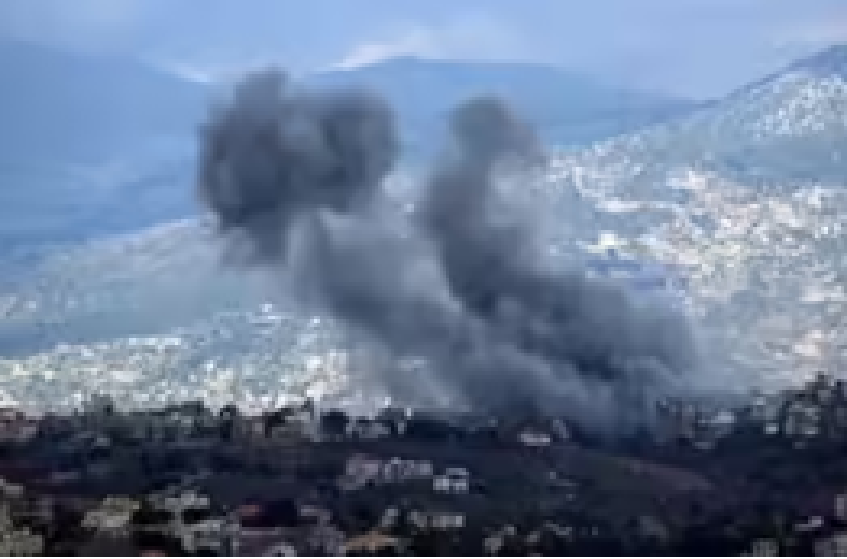

KABUL — Afghan and Pakistani forces exchanged heavy fire along their disputed border on Thursday, marking a sharp escalation in tensions between the two neighbours following Pakistani airstrikes earlier this week.
Afghanistan’s military said it had launched what it described as retaliatory operations after Sunday’s Pakistani strikes on border areas. Kabul claimed its forces had targeted Pakistani military bases along the Durand Line — the 2,611-kilometre frontier that Afghanistan has never formally recognised — and asserted that more than a dozen Pakistani posts had been captured.
Pakistan rejected those claims, confirming clashes along the border but denying that any army positions had fallen. Islamabad described the Afghan action as unprovoked.
“In response to repeated aggressions by the Pakistani military, large-scale offensive operations were launched against Pakistani military bases and installations along the Durand Line,” Afghan government spokesman Zabihullah Mujahid said in a post on X. Afghanistan’s Defence Ministry said fighting was under way across border areas in five provinces.
The two sides offered sharply differing accounts of casualties. Afghan deputy spokesman Hamdullah Fitrat claimed that up to 55 Pakistani soldiers had been killed, with 23 bodies taken into Afghanistan, and that an unspecified number had been captured.
Pakistan’s Information Minister, Attaullah Tarar, disputed the figures, saying two Pakistani soldiers had been killed and three wounded. He added that 36 Afghan fighters had been killed and denied that any Pakistani troops had been captured. Pakistan was delivering a “strong and effective response” to what he called unprovoked firing, he said.
Separate exchanges of fire were also reported near the Torkham border crossing, a key transit point between the two countries.
Authorities on both sides moved civilians away from the fighting. Afghan officials said a refugee camp near Torkham was being evacuated after several refugees were wounded. Pakistani police reported that residents in nearby villages were relocating to safer areas, while Afghan refugees awaiting repatriation were transferred to secure locations.
Pakistan’s police said mortar rounds fired from Afghanistan had landed in border villages, though no civilian casualties were immediately reported.
“Pakistan will take all necessary measures to ensure its territorial integrity and the safety and security of its citizens,” the country’s Information Ministry said.
Afghanistan’s military released video footage showing armoured vehicles manoeuvring at night accompanied by heavy gunfire. The footage could not be independently verified.
The latest confrontation comes amid months of heightened tensions. In October, deadly border clashes killed dozens of soldiers, civilians and suspected militants. Those incidents followed explosions in Kabul that Afghan authorities blamed on Pakistan — an allegation Islamabad denied before conducting cross-border strikes targeting what it described as militant hideouts.
A Qatari-mediated ceasefire has largely held since then, though sporadic exchanges of fire have continued. Talks aimed at formalising a peace arrangement in November failed to yield an agreement.
On Sunday, Pakistan’s military said it had killed at least 70 militants in airstrikes along the Afghan border, describing them as training camps of the Pakistani Taliban (TTP). Kabul rejected that account, saying the strikes hit civilian areas, including a religious school and residential homes, and killed dozens of civilians, among them women and children. Afghanistan’s Defence Ministry called the strikes a violation of its sovereignty.
Speaking before Thursday’s clashes, Pakistan’s Foreign Ministry spokesman Tahir Andrabi defended the airstrikes as “precision” operations conducted in response to a surge in militant attacks inside Pakistan. He accused the TTP of operating from Afghan territory — a charge denied by both Kabul and the group.
Militant violence has increased in Pakistan in recent years, much of it attributed to the TTP and banned Baloch separatist groups. While the TTP is separate from Afghanistan’s Taliban authorities, the two share historical ties, fuelling Islamabad’s longstanding concerns over cross-border militancy.
With both sides trading accusations and casualty claims, the latest flare-up underscores the fragility of the border and the deep mistrust that continues to define relations between Kabul and Islamabad.

